
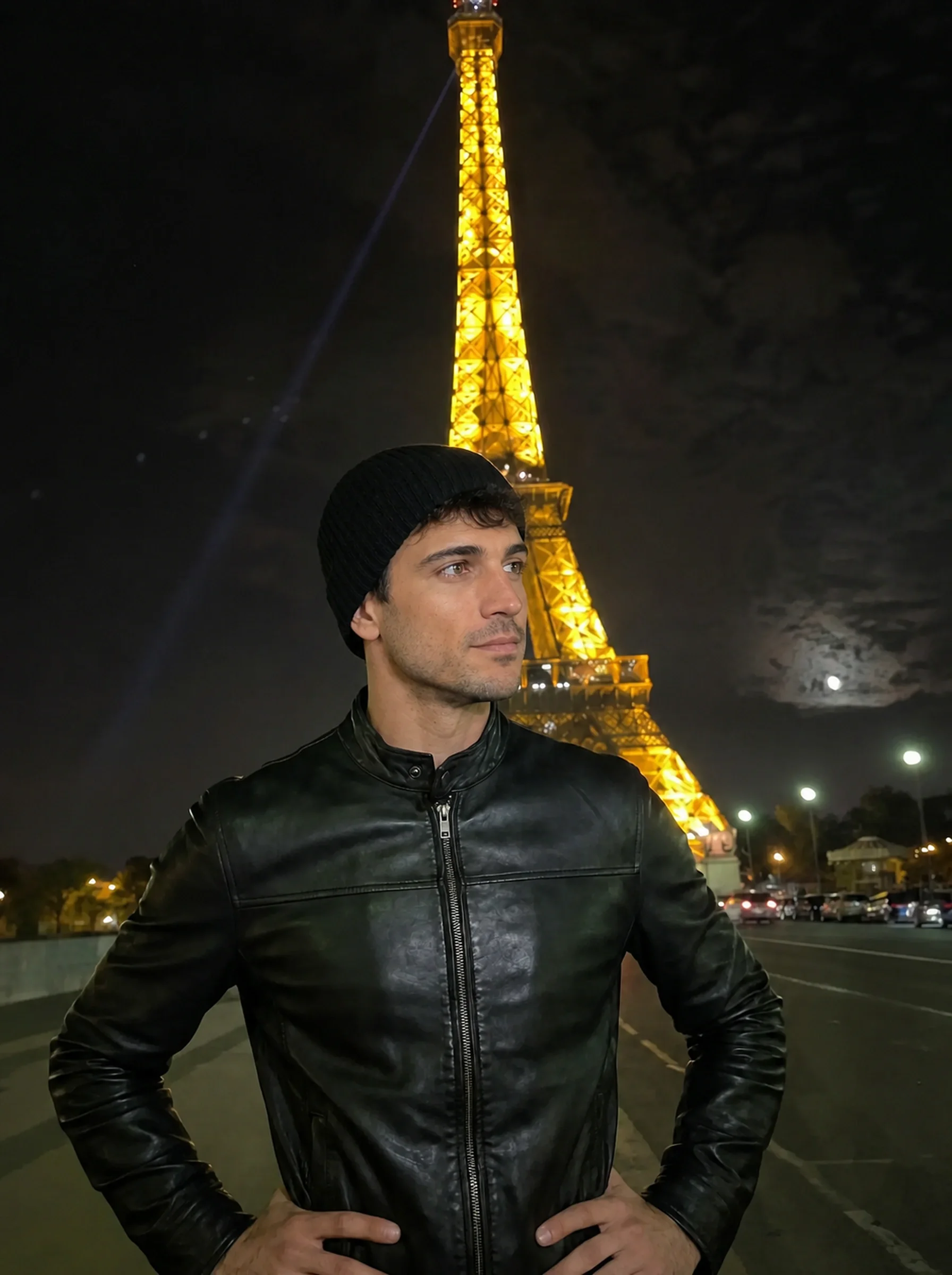
Where the line is between a better photo of you and a photo of someone you're not.
Disclosure: we make Dating Pics, an AI dating photo tool, so we have a stake in this question. We've tried to answer it the way we'd want it answered if we didn't.
The Short Answer
Using AI photos is catfishing when they change who you are — your face, body, age, or the life you actually live — in a way that would surprise a match when you meet. It isn't catfishing when the AI only changes the photo: the lighting, framing, background or outfit, while you still look exactly like yourself.
The simple test: if your match met you tomorrow, would they immediately recognise you from every photo on your profile? If yes, you're presenting yourself honestly. If any photo would make them do a double take, remove it.
Where the Line Is
Catfishing means presenting a false identity to someone online. Photos have always sat on a spectrum — good lighting, a flattering angle and a nice shirt are all "improvements", and nobody calls them deceptive. AI just makes it much easier to slide further along that spectrum. Three things decide which side you're on:
- Your appearance. Face shape, jawline, nose, eyes, skin, hairline, height, build and age should be yours, as they are today.
- Your life. Settings and activities should be things you do or plausibly could do. A café in your city is fine; a private jet you've never been on isn't.
- Your intent. Showing yourself at your best is normal dating behaviour. Trying to look like someone else is not.
Examples: Honest Improvement vs Catfishing
| AI photo that… | Verdict |
|---|---|
| Puts you in better light, same face | Fine |
| Shows you in a café, park or street like ones you go to | Fine |
| Dresses you in clothes you'd actually wear | Fine |
| Frames you from further away than a selfie | Fine — often more accurate than the selfie it came from |
| Shows you somewhere you've genuinely been | Fine |
| Places you somewhere you've never been, implying you travel there | Grey area — avoid if someone would ask about it |
| Smooths your skin until it looks airbrushed | Misleading |
| Changes your jawline, nose, eyes or body shape | Catfishing |
| Makes you look years younger or adds hair you don't have | Catfishing |
| Shows a lifestyle you don't have (supercars, yachts, luxury you can't afford) | Catfishing |
A useful way to think about it: a good AI dating photo works like a virtual photoshoot — same person, better camera position, better light, better setting. A bad one works like a mask.
What Tinder, Hinge and Bumble Actually Say
None of the three bans AI-assisted photos outright. All three ban pretending to be someone you're not.
- Tinder. Its Community Guidelines say: "Don't create a fake account or pretend to be someone you're not." They don't mention AI images specifically. Separately, Tinder's Face Check — a video selfie compared with your profile photos — is required for new users in California and several other countries, and Tinder announced in October 2025 that it's expanding across the US.
- Hinge. Its AI Principles say generative AI "should not be used to misrepresent yourself or your intentions." Hinge has also been rolling out Face Check market by market since 2026.
- Bumble. In 2024 Bumble added a reporting option for "Using AI-generated photos or videos" under fake profiles. Its case study with the Partnership on AI describes the aim as catching synthetic media used for fake or malicious profiles while allowing "creative use of generative AI within their authentic profiles."
Read together, the rule is consistent: the photos have to be you. For more on each app, see are AI photos allowed on dating apps?
Want to know if your photos are holding you back?
The free dating profile review scores any photo and tells you exactly what to fix — no signup.
Review my photo free →What Other Daters Think
Plenty of people don't like the idea. In Match and the Kinsey Institute's 2025 Singles in America study, 44% of singles said using AI to alter photos is a dealbreaker (as reported by Global Dating Insights). The same study found about a quarter of singles use AI somewhere in their dating lives — so people are both using it and wary of it.
That's the practical reason to stay on the honest side of the line, beyond the rules: someone who feels misled by your photos on the first date isn't going on a second one.
Should You Tell Your Matches Your Photos Are AI?
No app requires it, and there's no settled etiquette. Our view: if your photos pass the recognition test, you're not hiding anything that matters — it's closer to saying who took a photo. If you'd feel the need to explain a photo before the date, that's a sign it shouldn't be on your profile.
If someone asks directly, answer honestly. "I used an app to make some photos because I didn't have any good ones" is a perfectly normal thing to say — the problem is only ever the photos that don't look like you.
A Quick Checklist Before You Upload
- Would a match recognise me instantly from this photo?
- Are my face shape, skin, hairline and build how they look today?
- Is this a place or activity that's genuinely part of my life?
- Would I be comfortable if my match asked "where was this?"
- Does my profile still include at least one or two ordinary, real photos?
How we handle this at Dating Pics: you upload 4 selfies, your personal model is trained on your own face, and you choose everyday dating scenes — cafés, streets, outdoors, date night. Not every output will be usable, and any result that changes how you look should go straight in the bin. If you want to check whether your current photos even need replacing first, try the free dating profile review.
Questions People Ask
Is it catfishing to use AI photos on Tinder?
Only if they change how you look or misrepresent your life. Tinder's guidelines ban pretending to be someone you're not; photos that still look exactly like you don't do that.
How much can I edit my dating photos before it's misleading?
Light, colour, cropping and background are fine. Once you change your face, body, skin or age, it's misleading — whether you used AI, a filter or an editing app.
Do I have to say my photos are AI-generated?
No app currently requires it. If a photo would need explaining on the first date, leave it off.
Can I get banned for AI photos?
Apps remove fake profiles and accounts that impersonate others. Photos that don't match your face can also cause problems with verification like Tinder's Face Check.
Is it OK to use AI photos of places I've never been?
It's a grey area. A generic street or café is fine; a specific landmark implies you've been there, and someone will ask about it.
Is a heavily filtered selfie better than an AI photo?
Not necessarily. A face-reshaping filter can be more misleading than an AI photo that keeps your real face. What matters is the result, not the tool.