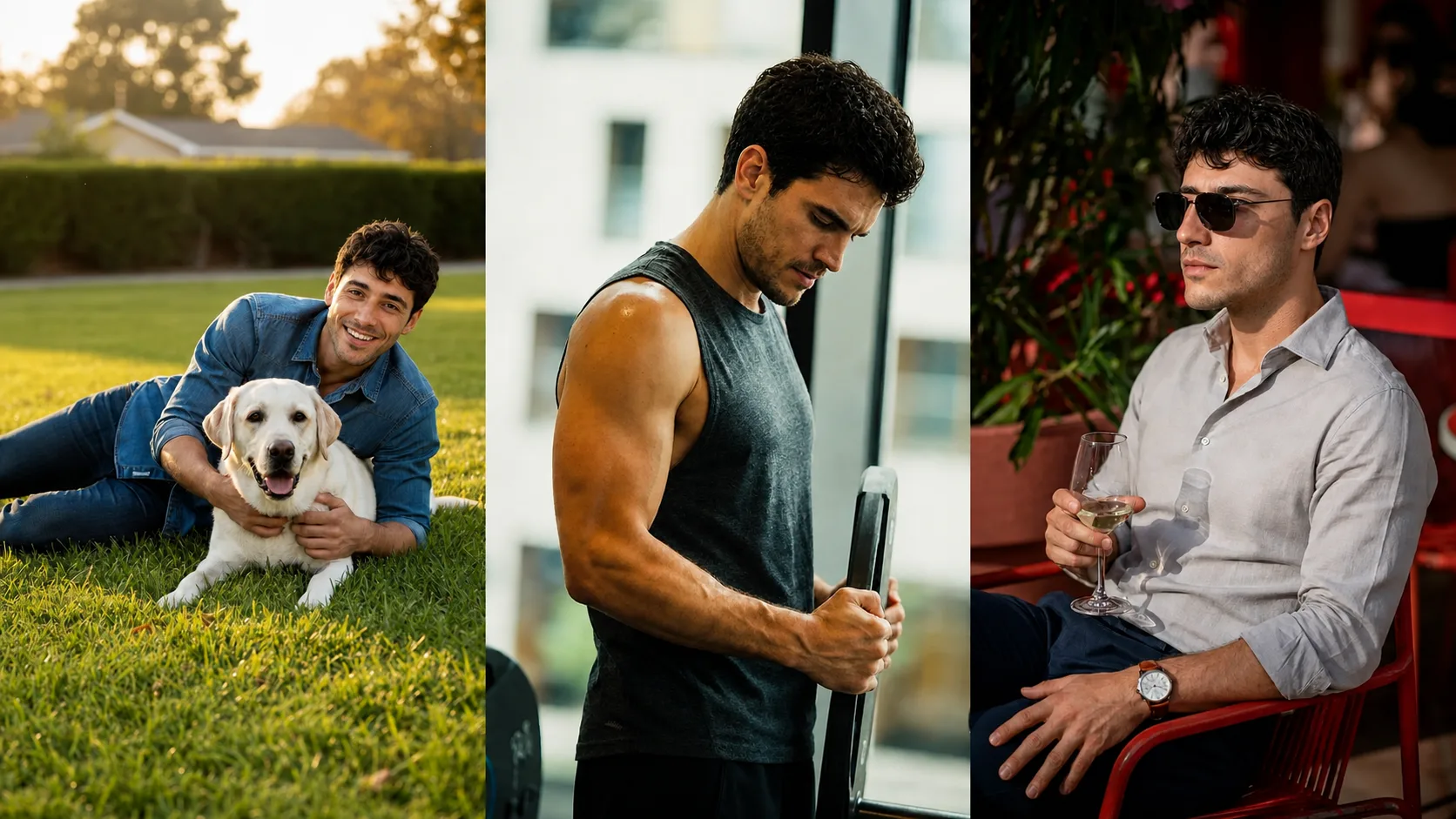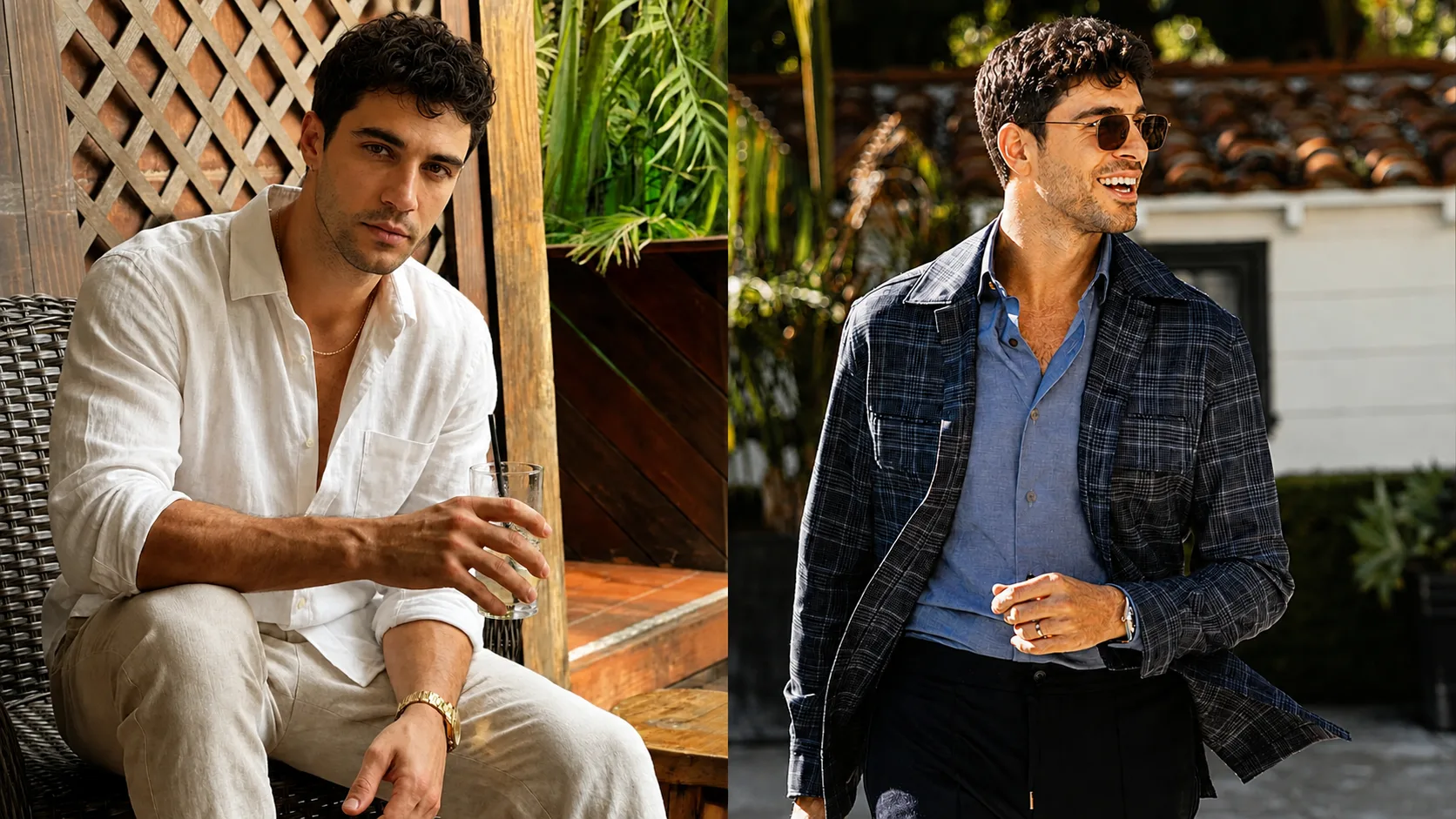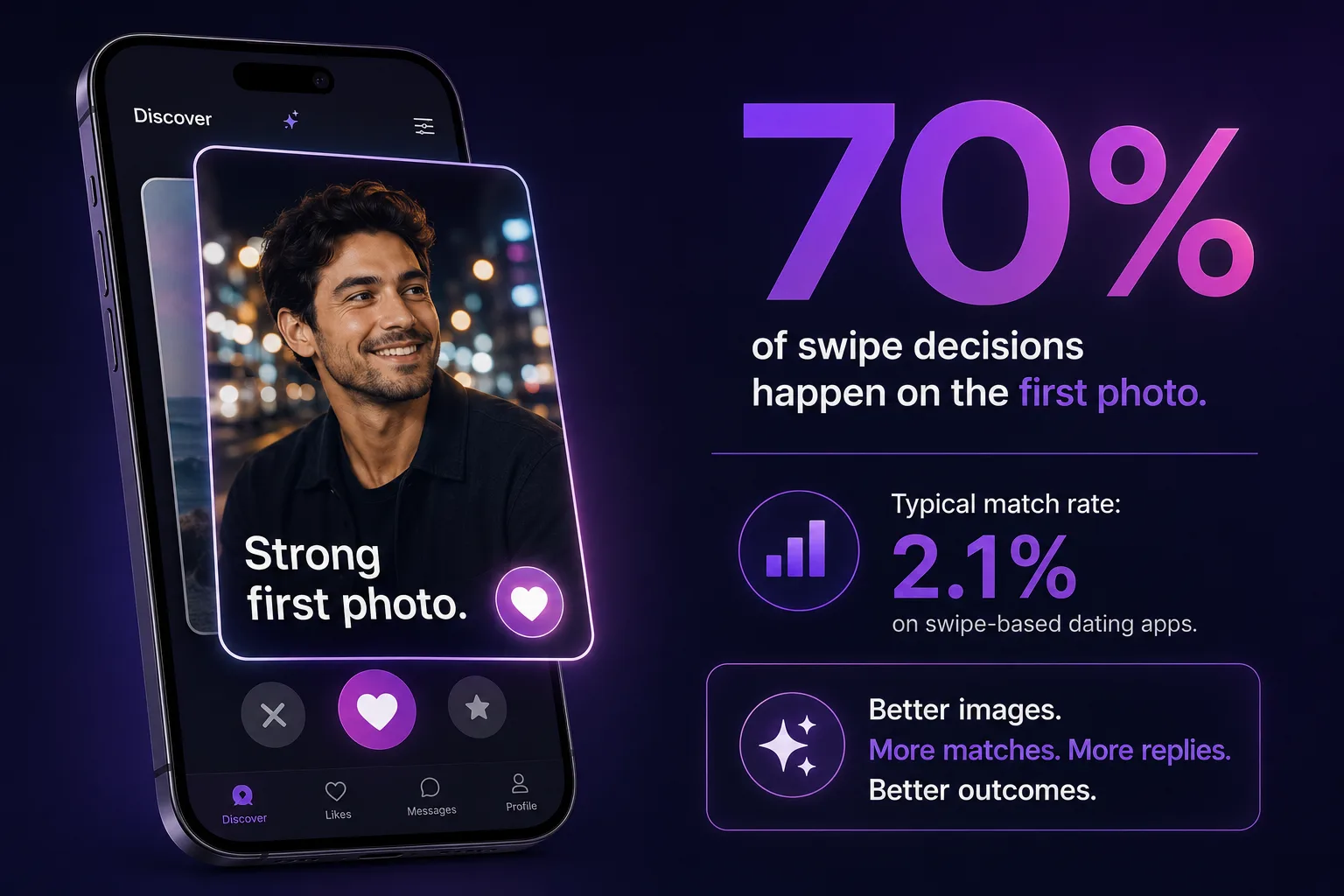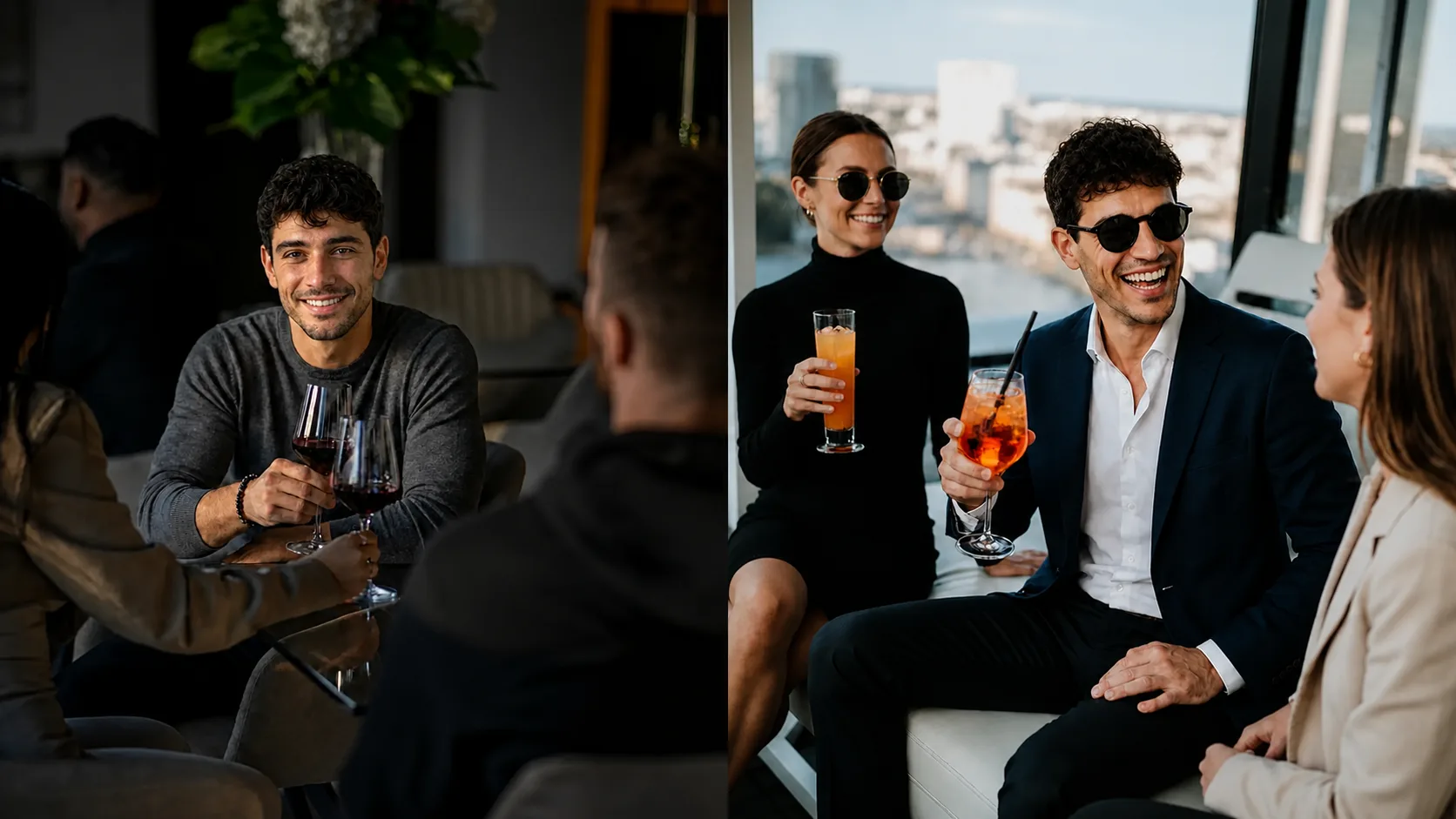

📌 TL;DR: The best AI photo generator for Hinge is Dating Pics. It focuses on warm, candid-looking lifestyle photos, the style that suits Hinge's conversation-first format. Most tools make you look like a LinkedIn headshot, which is the opposite of what Hinge wants.
In this guide:
- Why Hinge Needs a Different AI Generator
- How to Compare AI Hinge Photo Generators
- Best AI Photo Generators for Hinge: Ranked
- What Makes an AI Photo Work on Hinge
- Does Hinge Allow AI Photos? Face Check Explained
- How to Use AI Photos to Maximize Your Hinge Matches
- FAQ
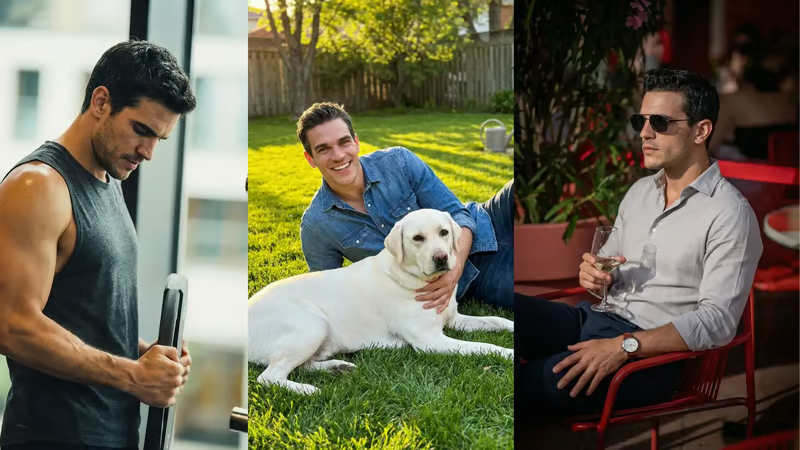
Ryan sent me a screenshot of his Hinge feed last month. He'd just dropped $39 on one of the popular AI photo generators you see all over TikTok. The photos looked incredible. Sharp lighting. Perfect skin. He looked like he belonged in a cologne ad.
Zero likes in two weeks.
Here's the problem: he'd bought a Tinder photo for a Hinge audience. Hinge users aren't swiping fast looking for the hottest possible option. They slow down, read prompts, and look for someone they could actually talk to. According to Hinge's own product dataGenuine, smiling photos tend to do better on Hinge than posed or polished shots. Slick corporate-looking AI photos kill your match rate on this specific platform.
Most guides about AI photo generators treat all dating apps the same. Hinge needs a different approach because every like can be attached to a specific photo or prompt. That makes photo context, prompt pairing, and a consistent likeness especially important when comparing AI photo generators for Hinge.
Switching to a generator that preserves your face is the difference between photos you'll use and photos you'll quietly delete.
I'll show you exactly why that happened, and what to look for when choosing an AI generator built for Hinge specifically.
Starting from $29. 14-day satisfaction guarantee.
Want to skip straight to generating photos? Our AI Hinge photo tool creates realistic photos from your existing selfies, with standard photos ready in about a minute.
Why Hinge Needs a Different AI Generator
Hinge was built around one philosophy: it's designed to be deleted. That mission shapes everything, including what photos its algorithm rewards.
On Tinder, a polished photo of you looking your most attractive gets swipes. On Hinge, that same photo can actually hurt you. Hinge's user base skews toward people aged 23-36 who are looking for relationships, not casual hookups. Business of Apps data from 2026 shows Hinge generated $689M in revenue in 2025, driven by users who are invested enough to pay for a better dating experience. These people can spot an overly processed, status-signaling photo from a mile away.
Hinge's algorithm makes it worse. Unlike Tinder's speed-swipe environment, Hinge lets users like or comment on a specific photo before they even match with you. That one detail changes everything. A photo that looks beautiful but feels staged gives nobody a reason to comment. A photo that looks like you mid-laugh at a rooftop bar? That gets comments. Comments get matches.
There's also the photo-plus-prompt system. Your photos don't live alone on Hinge. They sit next to answers to prompts like "My most controversial opinion is..." or "We'll get along if..." A generic model-like AI photo clashes badly with an honest, funny prompt answer. The best AI generators understand this and produce photos that feel like a real person, not a brand ambassador.
Finally, Hinge began rolling out Face Check in 2026, market by market — testing started in Mexico, Brazil, Australia and Canada, with US testing from March — and where it's active it requires a video selfie scan that matches your profile photos. Generators that alter your bone structure, soften your jaw, or widen your eyes will fail this check. Hinge-appropriate AI means photos that look like you on your absolute best day, not a different person.
Key takeaway: Hinge rewards warm, approachable, and commentable photos that feel authentic. AI generators optimized for Tinder produce the wrong aesthetic entirely, which is why you want a tool that can produce warm, candid lifestyle photos rather than headshots.
How to Compare AI Hinge Photo Generators
Disclosure: this guide is written by the team behind Dating Pics. We haven't run controlled match-rate tests across competing tools, so we don't publish rankings or pass rates. Here's the checklist we'd use on any tool, including ours:
- Does every photo still look like you? Same face, hairline, age and build. Where Hinge runs Face Check, photos that change your face are a real risk.
- Does it look warm and candid rather than corporate? Hinge is built around starting conversations; polished headshots rarely give anyone something to comment on.
- Is there scene variety? You need several photos that each show something different about you.
- Is the skin realistic? Airbrushed skin is the quickest AI giveaway.
- Price and privacy: check current pricing on each tool's own site, and read how they store your selfies.
And the simplest test of all: if your match met you tomorrow, would they recognise you from this photo? If not, don't use it.
AI Photo Generators for Hinge: What to Compare
Prices, photo counts and features change too often for a fixed ranking to stay accurate, so here's how the main types of tools compare for Hinge specifically:
| Type of tool | Keeps your face? | Hinge fit | Main risk |
|---|---|---|---|
| Dating-focused AI generators (e.g. Dating Pics) | Designed to — check every result | Lifestyle and candid scenes | Outputs that drift from how you look |
| AI headshot tools | Usually | Too polished for Hinge | Reads like LinkedIn |
| Free general AI image tools | Inconsistent | Depends on your prompts | Face changes between shots |
| Real photographer | Yes | Great if the shoot is candid | Typically $300–$500, can look staged |
Where Dating Pics fits
Dating Pics is built for dating profile photos rather than general portraits, with relaxed, candid-style scenes rather than studio headshots. From $29/month or a one-time $9 Starter Pack, and because you can generate across many different scenes, you can fill your 6-photo profile with genuinely different settings and moods. As with any tool, keep only results that clearly look like you.
What to watch for in other tools
Headshot-focused generators often default to a polished, professional look — great for LinkedIn, less natural for Hinge's "let me see who you really are" audience.
Free general-purpose image tools can change your facial features between shots, and plastic-looking skin or unrealistic lighting reads as fake to anyone paying attention. A face that doesn't match you is also a problem if you're asked to complete Face Check.
Key takeaway: For Hinge specifically, face fidelity and "warm, candid" photo aesthetics are the two filters that separate functional tools from wasted money.
What Makes an AI Photo Actually Work on Hinge
Hinge's algorithm doesn't just measure attractiveness. It measures engagement. Comments, likes, and conversation-start rates all feed back into how often your profile gets shown. An AI photo that looks great but feels too polished can suppress all three of these signals.
Here's the breakdown of what Hinge-optimized AI photos need to do:
Pass the "Is This a Real Person?" test
Hinge's user base is relationship-motivated. Research from Pew Research Center found that 3 in 10 U.S. adults have used a dating site or app. On a relationship-focused app like Hinge, an obviously processed photo works against you. If your photo looks too perfect, it reads as suspicious. Skin texture should look natural. Backgrounds should be sharp and realistic. Lighting should look like outdoor daylight or a lively venue, not a studio.
Invite a conversation starter
Hinge's like-before-match system means a photo needs to give someone something to comment on. A man standing against a plain background gives nobody a hook. The same man holding a coffee on a rooftop in the morning? Someone's going to ask where that was. Good AI generators produce you in settings that tell a story: hiking, at a bar, cooking, at an art show. These are conversation scenes, not headshots.
Complement your prompts
Your Hinge profile is photos plus prompts. They have to feel like the same person. A hyper-polished AI photo sitting next to a funny, self-deprecating prompt answer creates a jarring mismatch. Hinge users pick up on this. Dating Pics's outputs tend to read as "regular guy having a great life," which pairs naturally with honest prompt answers.
Keep your real facial features without altering structure
Hinge's Face Check (using FaceTec biometric technology as of Q1 2026) compares your profile photos to a video selfie scan. Any AI tool that alters your jaw shape, eye size, or nose will fail this comparison. The sweet spot is photos where you look demonstrably better, but unmistakably still you.
Key takeaway: On Hinge, an AI photo's job is to spark curiosity and look like a real person, not to make you look like a model. The best outputs use lifestyle settings, natural texture, and accurate facial representation.
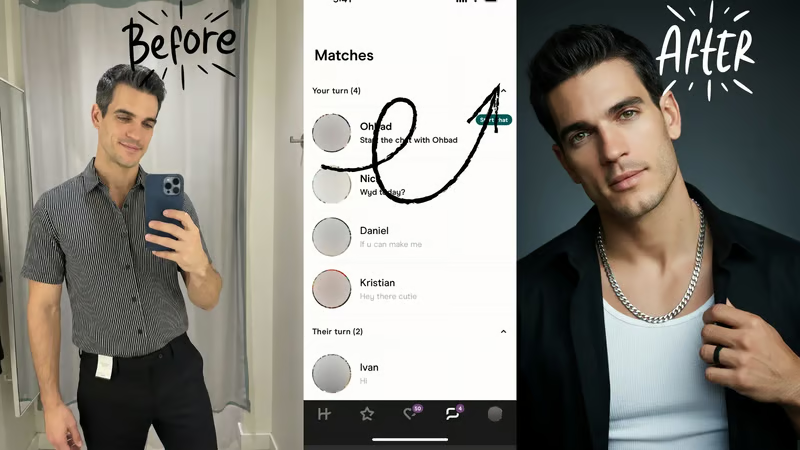
Hinge AI Photo: Do This vs. Avoid This
| Element | ✅ Do This | ❌ Avoid This |
|---|---|---|
| Lighting | Natural daylight, warm venue lighting | Studio softbox, dramatic shadow |
| Background | Real locations (parks, restaurants, streets) | Plain/blurred/fake generated backgrounds |
| Expression | Mid-laugh, relaxed genuine smile | Posed model smirk, serious look |
| Setting | Activity context (outdoor, social, hobby) | Against a wall, nondescript room |
| Skin texture | Natural pores visible | Poreless, "filtered" smoothness |
| First photo | Clear face, inviting expression | Only face, no context or story |
| Body language | Relaxed, open, natural posture | Stiff, squared-up, arms crossed |
Does Hinge Allow AI Photos? Face Check Explained
This is the question I get most often, and the answer is: yes, but with important conditions.
Hinge's official AI Principles page states that generative AI images are allowed on profiles as long as they don't misrepresent you or your intentions. The key phrase is "misrepresent." AI photos that look like you, in real settings, doing real things, are within policy. AI photos that make you look like a completely different person are not.
The practical enforcement mechanism is Hinge's Face Check biometric scan, which has been rolling out market by market since 2026. It uses FaceTec liveness detection (confirmed by Biometric Update in February 2026) to compare your profile photos against a video selfie. If the AI tool you used preserved your actual facial structure, you pass. If it made you look significantly different, you fail and your photos get removed.
This is why choosing a generator with accurate facial preservation isn't optional on Hinge. It's required.
The goal is photos that look better than your selfies but still clearly look like you. That's the whole constraint — discard any result that doesn't.
Key takeaway: Hinge allows AI photos that accurately represent your real appearance. High-quality generators enhance you without altering your core facial structure. Tools that generate a different-looking person will fail biometric review.
Try Dating Pics for your Hinge photos →
Starting from $29. 14-day satisfaction guarantee.
How to Use AI Photos to Maximize Your Hinge Matches
Getting good AI photos is step one. Using them right on Hinge is step two. Most people skip step two entirely.
Pick your Hinge lead photo strategically
From your Dating Pics batch, pick the photo where you're:
- Smiling naturally (not cheesing at a camera)
- In a real-looking location
- Clearly visible from the shoulders up
Skip the suited-up business look as your opener, even if it's your best-looking photo. Save the status photos for positions 3-5.
Spread your photo variety
Hinge lets you upload 6 photos. Use that diversity deliberately.
☐ Photo 1: Clear smiling headshot in a real setting (your lead) ☐ Photo 2: Full or half-body shot showing your actual height and build ☐ Photo 3: Doing something you genuinely enjoy (hobby, sport, travel) ☐ Photo 4: Social context, one or two friends visible ☐ Photo 5: Something that prompts a specific comment (unusual location, funny detail) ☐ Photo 6: Dressed up or showing a different side of you
Dating Pics generates photos across varied scenes, so you can pick the best 6 across different moods and settings rather than trying to stretch 12 mediocre selfies.
Match your photo energy to your prompts
Hinge users read profiles holistically. Your photos set a vibe and your prompts confirm or contradict it. If your photos show you at a rooftop bar and your prompt says "I'm a homebody who loves cooking," there's a mismatch. Pick photos whose setting and energy match the person your prompts describe.
Don't upload all polished shots
A profile of 6 flawlessly-lit AI photos looks synthetic. Mix in one or two photos that are real (casual friend photo, normal day out) alongside your AI-generated best shots. This creates texture and credibility. It looks like a real life, not a photo campaign.
A conjoint analysis of 5,340 swiping decisions published in 2025 found that a one standard deviation improvement in photo attractiveness boosts match selection by approximately 20%. But authenticity signals prevent that gain from being undermined by perceived fakeness on platforms like Hinge.
Key takeaway: The photo batch from an AI generator is raw material. Curation matters as much as generation. On Hinge, six strategically chosen, varied, and prompt-aligned photos outperform the twelve "best looking" shots every time.
Generate your 60-photo Hinge batch and choose the best 6 →
Frequently Asked Questions
Are AI photos allowed on Hinge?
Yes. Hinge's official AI Principles allow generative AI images on profiles as long as they don't misrepresent you or violate community guidelines. The practical requirement is that your AI photos look like you. Hinge's Face Check (rolling out market by market since 2026) compares profile photos to a live video selfie. Photos from quality generators like Dating Pics pass because they enhance your real appearance rather than replacing it.
Can Hinge detect AI-generated photos?
Hinge uses a combination of AI detection tools and human moderators to review photos. However, their moderation focuses on photos that obviously misrepresent a person's appearance, not on detecting AI use in general. High-quality AI photos that preserve your real facial structure and use realistic lighting are not flagged in practice. Photos that look like they came from a cartoon generator, have plastic skin, or show a person who looks nothing like your selfie verification photo will be removed.
How does Hinge's Face Check biometric scan treat AI photos?
It compares face geometry, so what matters is whether the generator preserved your real facial structure. Hinge's Face Check uses FaceTec liveness detection to compare your profile photos against a recorded video selfie. If the AI tool you used maintained your actual bone structure, eye shape, and general appearance while improving lighting and setting, you'll pass. Dating Pics is built to keep face geometry fixed rather than restyle it. Generators that alter facial features significantly (common in free tools and older models) fail this comparison.
What photos perform best on Hinge compared to other apps?
Hinge favors candid, warm, and commentable photos over polished, status-heavy shots. Genuine, smiling photos tend to do better than posed ones. Hinge's research also shows that commenting on a photo when sending a like boosts match chances by approximately 40%, so your photos need to give people something to say. On Tinder, a polished model-style shot works well. On Hinge, that same photo often underperforms a natural-looking lifestyle shot.
How many AI photos do I need for Hinge?
You need 6 photos for a full Hinge profile. But you should generate significantly more than 6 to have good selection options. Dating Pics lets you generate across many scenes from a single set of selfies, which gives you variety across different settings, expressions, and outfits. Uploading 6 from 60 options is very different from uploading 6 from 8 options where they all look similar. More raw material means better final curation.
What's the difference between a Hinge AI photo and a Tinder AI photo?
The key difference is the aesthetic target. Tinder rewards high-attractiveness photos optimized for a quick swipe decision. Hinge rewards photos that feel authentic, show personality, and give someone a reason to comment before matching. An AI generator optimized for Tinder will produce polished, professionally-lit headshots. An AI generator optimized for Hinge produces warm, lifestyle-context photos where you look like a real person having an interesting life. Dating Pics is built around dating-oriented scenes rather than corporate headshots, which matters for this distinction. Most general-purpose generators do not.
How many likes should I expect after uploading good AI photos on Hinge?
There's no reliable number to promise — it depends on your location, age, settings and the rest of your profile. Better photos improve your odds, but anyone quoting a guaranteed increase is guessing.
What do people on Reddit say about AI photos on Hinge?
Reddit's r/hingeapp and r/SwipeHelper communities have extensive threads on this. The consensus is nuanced: high-quality AI photos that look natural and actually resemble you generate real results. Low-quality AI photos that look obviously fake backfire because Hinge users are more discerning than Tinder users. The most upvoted advice consistently recommends tools that preserve your real appearance. Complaints are almost always about free tools or older generators that create uncanny skin texture. Threads like the r/SwipeHelper guide to photorealistic dating photos specifically warn against generators that alter facial features.
Can I use AI photos on Hinge if I'm looking for a serious relationship?
Yes, and there's no contradiction here. AI photos aren't fake photos of someone else. They're you, in real-looking settings, on your best day. Hinge's policy confirms this. The photos I'm describing look exactly like you: same face, same features, same build. They just show you in better lighting, better settings, and without the unflattering angles that ruin most selfies. When someone meets you in person, they'll recognize you immediately. That's the standard Dating Pics was built to meet. If you're getting zero likes on Hinge despite trying, your photos are almost always the first thing to fix.
The Bottom Line
Hinge is not just a dating app with stricter vibes. It's a fundamentally different algorithm, a different user psychology, and a different photo standard than Tinder or Bumble.
Most AI photo generators were built for the generic dating app market. They produce polished, attractive photos optimized for a quick swipe decision. On Hinge, those photos actively hurt your results.
The generator that consistently performs on Hinge is Dating Pics: plans from $29 (or a one-time $9 Starter Pack), standard photos in about a minute, built around preserving facial structure, and produces the warm, lifestyle-context photos that Hinge's relationship-focused users actually respond to.
Create your Hinge photos today →
Starting from $29. Standard photos in about a minute. 14-day satisfaction guarantee.
About the Author
Elliot Vance writes about dating profile photography for Dating Pics. He covers Hinge specifically — how its prompt-and-photo format changes what a good photo set looks like compared to a swipe-first app. Dating Pics generates AI photos built for dating profiles rather than general portraiture. Read more across North America and Europe.
Master Your Dating App Strategy
Not sure this is the only thing holding you back? Start here:
- Getting zero likes on Hinge?: photos are usually only half the problem. This guide covers Hinge's algorithm, prompts, and engagement timing in detail.
- Best Hinge profile pictures (photo composition guide): once you have AI photos, this explains which 6 types to pick and how to order them for maximum algorithm performance.
- Also on Bumble or Tinder?: Bumble's women-first algorithm and Tinder's speed-swipe environment need different photo strategies. We cover both.